Discography

Ezio Bosso The Hidden Room

The Hidden Room

This album consists of two stories.
The first one dates back to 2012, shortly after his “personal flood,” as he used to call it, which struck Ezio in 2011: it begins with an intense sunset, one of those spring ones with the light filtered by the clouds that color the sky an intense orange, and the flight of a bird that made him unconditionally lose himself until he could no longer perceive that play of colors.

From that sunset and that bird’s flight came the now-famous “Following a Bird“.
It is presented here in its original version for piano and violin, with the addition of the two movements born with it, never performed before, which complete the work “Unconditioned“.

The second story starts in 2013 when his “steps” were no longer the same and he had to “learn to run” with music: during that period, three notes resonated in his head, which then transformed into “three movements (or rather, ‘three drawings’) for missing steps.”

The composition is dedicated to the Dervishes, from the ancient Persian Darwish, the disciples of the Islamic philosophical fraternities, who, for their path of asceticism, are called to detach from worldly passions to reach the sky.

Through the notes, Ezio describes, in his intentions, the journey that leads the Dervish to a moment of reflection and abandonment of earthly things to devote himself only to the sacred texts (Silent Dialogues), thus learning to proceed spiritually with a sweet mantra (Sweet Mantra) for an inner journey that is completed step by step, in a voyage towards greater self-understanding and understanding of the world, which finally leads him to root his feet on the ground and look upwards to elevate himself spiritually in a mystical challenge (Majdhb, from the ancient etymology of magic).

The piece was performed only once, on August 9, 2014, at the “Time in Jazz” festival by Paolo Fresu, whom we thank immensely for sharing the concert recording, which has been more than fundamental for this album.

This album closes a cycle that began two years ago with the publication of “The Four Letters“, followed the next year by “Emily Reel #15” and the publication of “Lighting Bosso” by Maestro Libetta, one of the finest pianists who have performed Ezio’s music, to whom we will always be grateful.

We are honored and happy that Francesco has recorded again on the “Big Brother” together with Grazia, Luigi, and Aylen, with great study, dedication, and sacrifice in true Bosso style.

Could this be the last album of unpublished works? As of today yes, but Ezio has accustomed us to everything.
You never know what might come out of a drawer, because as Ezio used to say, and as we will all continue to repeat: “It’s Never Over.”

No Ezio, It’s Never Over…

Bosso Family, August 2024
SIDE A

Sonata No.1 For Violin and Piano “Unconditioned

  1. Adagio, Resonances 06:07
  2. Allegro Molto, Like Unbreakable Desires 04:50
  3. Dolcemente, Unconditionable, Following a Bird 09:07

Francesco Libetta: Piano
Aylen Pritchin: Violin

SIDE B

Trio No.2 “Three Drawings About Missed Steps

  1. Adagio, Silent Dialogues 06:28
  2. Allegretto, Sweet Mantra 06:46
  3. Finale, Allegro con fuoco, Majdhb 08:21

Francesco Libetta: Piano
Luigi Piovano: Cello
Grazia Raimondi: Violin

All music composed by Ezio Bosso between 2012 and 2014

Recorded on July 2024 at Kommende Lengmoos, Longomoso (BZ)
Recording Engineer, Editing and Mastering: Michael Seberich

Score Revision by Francesco Libetta

Francesco Libetta plays a Piano Steinway & Sons Model D. No. 582447
Piano Tuning and Preparation: Giulio Passadori for Passadori Pianoforti

Luigi Piovano plays an Alessandro Gagliano from 1710
Aylen Pritchin plays a Francesco Gobetti from 1710
Grazia Raimondi plays an Giuseppe Gagliano from 1783

Direction and Executive Production: Tommaso Bosso
PR and Booking: Alessia Capelletti – a.capelletti@capelletti-moja.com
Design: Lorenzo Fantetti

Ezio’s Photos: Julian Hargreaves
Musicians Photos: Flavio Ianniello and Grazia Lissi

All Tracks © Buxus Edizioni srl

Buxus Records warmly thanks Valentina Grassi for the invaluable help during the recording sessions

www.libetta.it
www.luigipiovano.com
www.aylenpritchin.com
www.graziaraimondi.com

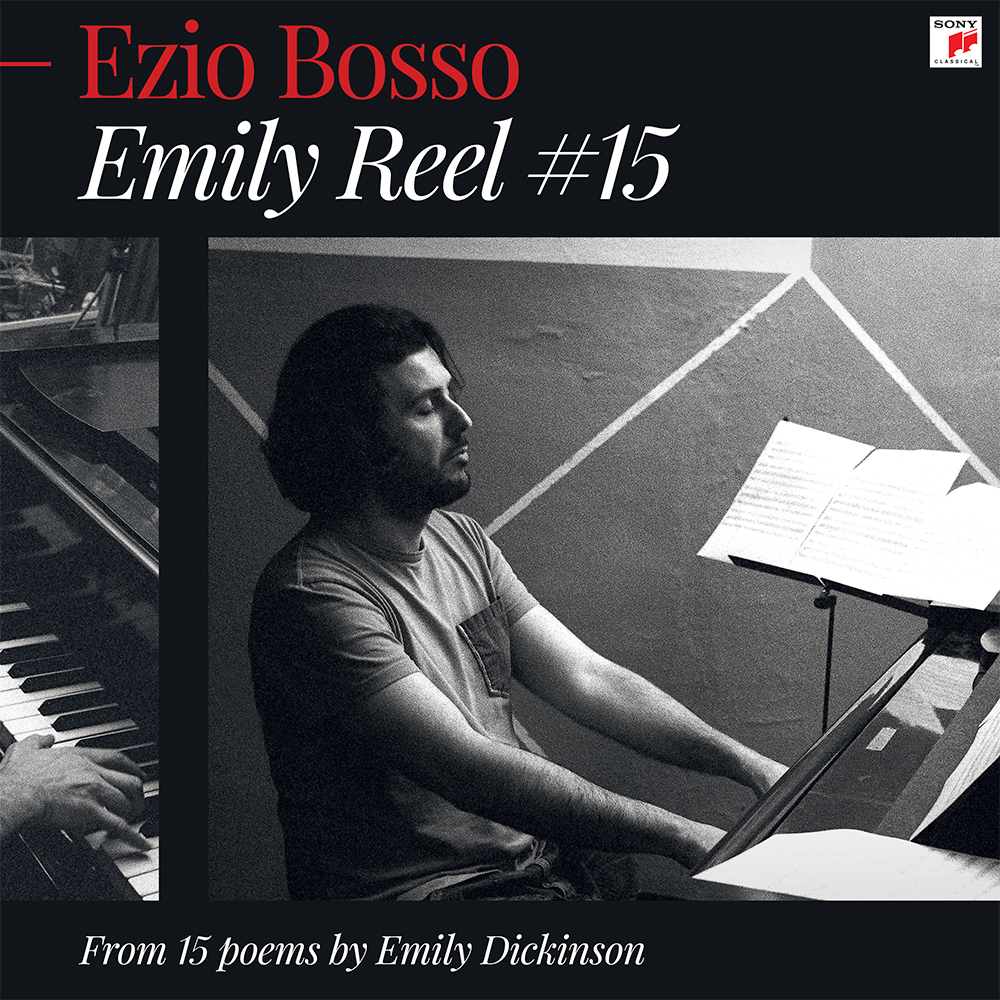
Emily Reel #15 - From 15 Poems by Emily Dickinson

“Emily Dickinson is one of my favorite poets. I believe I have read all of her poems, letters, and writings. I have written many pieces about her poems, which she called ‘my little rooms’.”
Ezio Bosso

In 2007, Ezio conceived a project inspired by Emily Dickinson’s poems which involved music, recitation, and video. Unfortunately, this performance remained just an idea.
Some compositions were later performed live with his Buxusconsort, a few found place in the album “Seasong” but most remained only on paper.
With David Romano, the last violin of the Ezio Bosso Piano Trio and of his most ambitious project, the Europe Philharmonic Orchestra, we thought it was time to record those scores.

In his mind Ezio imagined an actress reading the poems between the compositions: for the sake of completeness we have transcribed them here with the hope to watch that show conceived by Ezio more than fifteen years ago.

This album, preceded by “Four Letters,” is the progress of a journey that started three years ago to ensure that what Ezio left behind will not be lost but, above all, can be enjoyed by everyone. There is no one Ezio’s heir, we are all his legacy and each one of us can contribute, even by listening to this music you have in your hands for the first time.

It’s never over…

Bosso Family, May 2023

1. Bloom
2. I came to buy a smile
3. Wondrous sea
4. Could live
5. If all the griefs I am to have
6. The summer that we did not prize
7. The mind
8. The maddest noise
9. Oh cunning wreck
10. To whom the mornings
11. I make his crescent fill or lack
12. The first day that I was a life
13. Who cares about a Blue bird’s tune
14. We Cover Thee Sweet Face
15. Festa

All music composed by Ezio Bosso between 2007 and 2008

Performed by Avos Project Ensemble
David Romano, Matteo Baldon: Violins
Riccardo Savinelli: Viola 
Diego Romano: Cello
Vieri Piazzesi: Double Bass
Mario Montore: Pianos

Giovanni Tonon: Organs on “Oh Cunning Wreck” and “Wondrous Sea”
Francesco Mazzonetto: Celesta on “The Mind”

Executive Production: Tommaso Bosso for Buxus Records
Special Consultant: Filippo Cosentino
Strings recorded at Istituto Romano di San Michele’s Church, Roma, February 2023

Organ recorded at San Lorenzo Martire’s Church, Pianzano (TV), January 2023
Celesta recorded at SoundHouse Studio, Torino, March 2023

Recorded by Tommaso Bosso
Edited and mixed by Tommaso Bosso and Giovanni Corona at SoundHouse Studio, April/May 2023
Mastered by Andrea De Bernardi at Eleven Mastering, Busto Arsizio (VA), June 2023

Wondrous Sea and Oh Cunning Wreck have been recorded with the instruments tuned at 431Hz

Ezio’s Photos: Alex Astegiano, www.alexastegiano.it
Ensemble Photos: Flavio Ianniello
Packaging Design: Lorenzo Fantetti

Buxus Records warmly thanks:

  • Giuseppe Ierolli for his help on Emily’s poems and for the italian translations, check his incredible work on www.emilydickinson.it
  • Fiorella Sina for her invaluable help during the editing sessions
  • Alex Astegiano for the wonderful Ezio’s photos taken from their 2005 photo shoots in Monchiero Alto
  • Ascolta su Spotify
  • Ascolta su Youtube
  • Ascolta su Apple Music
  • Tidal
  • Deezer
  • amazon-music
Eziobosso No Mans Land

No Man's Land | Piano Trio No.1

Found in the Ezio’s archives after their arrangement and cataloging, this is the first piano trio ever composed, forerunner of many of his most famous compositions.

Composed in 2001, Recorded in 2007 at London, UK.

Piano: Ezio Bosso
Violin: Véronique Serret
Cello: Jeoffrey Stan

Piano trio No 1 “No Man’s Land

00.04.05

Piano: Ezio Bosso
Violin: Véronique Serret
Cello: Jeoffrey Stan

Cover Photo by Alex Astegiano from the project “Pure Wind”

  • Ascolta su Spotify
  • Ascolta su Youtube
  • Ascolta su Apple Music
  • qobuz
  • YouTube Music
  • Tidal
  • Deezer
  • amazon-music

The Four Letters / A Tribute to the Past

More than two years after his death and to celebrate his fifty-first birthday, the first publication of unpublished compositions from the immortal Maestro Ezio Bosso.

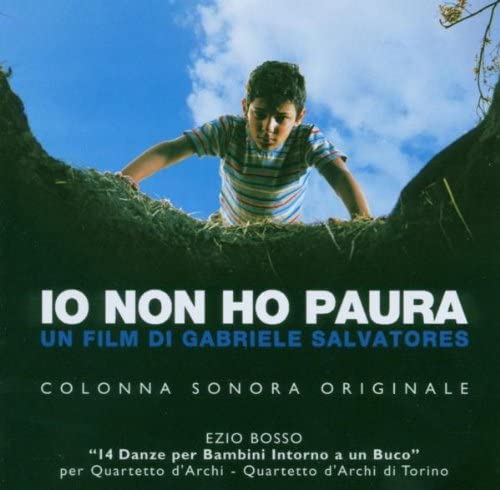
The String Quartet No.4 “The Four Letters” was composed in 2006 and is inspired by the letters of four partisans sentenced to death between ’43 / ’44, two Italians and two Germans, the work has never been recorded and it has been played by the Quartetto d’Archi di Torino, Ezio’s historic collaborator in the early ’00s and already the quartet of the famous soundtrack of the movie “I’m Not Scared by Gabriele Salvatores.

Moreover, to celebrate 20 years after the recording of this important soundtrack, this album contains re-recorded version of excerpts of the soundtrack, including the most famous piece “Rumba Verso il Buco”.

The album has been recorded at the Riverside studio in Torino and the mastering has been performed at the prestigious AIR Studios in London, reference studio of the Maestro for many of his albums of the first decade.

This release coincide with the birth of Buxus Records, the record company division of the Buxus Edizioni, the publishing company founded by the Bosso’s family with the aim of enhancing Ezio’s published and unpublished compositions.

Strings Quartet No 4 “The Four Letters”

I. Humans 06:09
II. Hopes 03:59
III. Rebellions and Dreams 06:01
IV. Freedom 03:30

A Tribute To The Past

Music From “Io Non Ho Paura” OST
V. Danza 1, Rumba Verso il Buco 01:37
VI. Danza 6, Requiem Gitano 02:14
VII Danza 8, Contro i Padri 01:49
VIII. Danza 12, Dei Tuoni 01:39

All music composed by Ezio Bosso
Performed by Quartetto D’Archi di Torino
Edoardo De Angelis, Umberto Fantini: Violins
Andrea Repetto: Viola 
Manuel Zigante: Cello

Executive Production: Filippo Cosentino and Tommaso Bosso for Buxus Records

Recorded, Edited and Mixed at Riverside Studio, Torino, Italy, July 2022
Recording Engineer: Alessandro Taricco
Assistant Engineer: Pietro Occelli
Mastered by John Webber at Air Studios Mastering, London, UK
Design: Lorenzo Fantetti
Cover Photo: Flavio Ianniello for Villa Pennisi in Musica, www.vpmusica.com
  • Ascolta su Spotify
  • Ascolta su Youtube
  • Ascolta su Apple Music

YouTube Music

Tidal

Deezer

Piano trio The Things that Remain

The Things that Remain

The last recorded composition by Maestro Ezio Bosso who died on 14 May 2020 is also the name of a documentary film by Giorgio Verdelli, Ezio Bosso: The Things That Remain, produced by Sudovest Produzioni, Indigo films and Rai Cinema, and distributed by Nexo Digital, to be screened in Italian cinemas on 4,5, an 6 October 2021.

Thinking about Ezio, one of the most powerful memories that stays with me is an email sent to me and a few other close friends with the subject line “The Things That Remain”.

In the email Ezio wrote:
“And The Things That Remain is a new project on which I’m working. I’d like to share it with you and ask you to take part in the inspiration process by posting – here or on my personal page – a list, thoughts, photos or paintings or anything you like that represents for you “the things that remain”. Would you like to play this game with me?”

Subsequently, beginning with this very simple but also complex idea, Ezio composed a piece for piano trio. He played it on rare occasions, for different reasons, but he never recorded it or published it.

A few years later, his recording company asked him to release an album entitled …And the Things That Remain: from 2004 to the present day. The release of this album, whether intentionally or not, coincided with the close of Bosso’s time as a composer and he devoted his life to a different artistic vocation, that of conducting orchestras (The Roots, A Tale Sonata was released in 2018 but the first version was composed in 2012).

In describing the album, Ezio invoked the piano trio composition:
“…it is trio for violin, cello and piano that I wrote some time ago. It is all about a thought, a question which we all, sooner or later pose ourselves: what remains of all of this at the end, what remains after? What remains of us and remains for us… It is a trio that I am still a bit shy for people to hear because it was born in the most profound silence. Silence, as it always does, poses these questions to everyone around and everyone it can.
One day I hope to let you listen to the trio… And The Things That Remain. Have a nice trip.”

At the end of July of this year, literally a few days after the closing of production on Giorgio Verdelli’s documentary, while searching for some material to put into the film, I discovered a neglected-looking hard disk. I hooked it up to my PC and among the files I discovered there, a folder jumped out at me labeled “things”.
It contained the recording of that piece.

Given that it did not yet have a title, as a tribute to this “gift from fate”, Giorgio and I decided to call the documentary Ezio Bosso. The Things That Remain.

The recording may not be as perfect as Ezio would have liked, which is probably part of the reason he never wanted it released, but with his passing, hevery word and every note has taken on more meaning and importance than ever. It is in this spirit that we are sharing the last recorded piece by Ezio Bosso for the first time (unless there is a hard disk with a tera byte of undiscovered music hiding somewhere!).

The release of this track closes a circle that began exactly ten years ago but it also adds depth to an ever-evolving story. The Things That Remain was born as a project about sharing, it became a piano trio composition, it transformed into an online platform (www.thingsthatremain.it), it inspired a documentary film on Ezio and became a unique expression of the doubts and fears that haunted his final years but also of the marvelous power of his imagination.

Because I will never get bored and I will never stop repeating: “It’s never over.”

…and so, good things remain for all of us

Tommaso Bosso
September 2021

Live recorded in 2012

Ezio Bosso: Piano
Giacomo Agazzini: Violin
Relja Lukic: Cello

Audio restored and mixed by Giovanni Corona, SoundHouse studio, Turin
www.soundhouse.it

Graphic: Mauro Ciocia
Photo: Sonia Ponzo, www.soniaponzo.com

Buxus Edizioni

Ascolta su Spotify

Ascolta su Youtube

Ascolta su Apple Music

YouTube Music

Tidal

Deezer

Ezio Bosso - a life in music

A Life in Music

Box set with the 15 recordings in existence, from 2004 to 2020.
Includes a booklet brings together some unpublished photos of Ezio Bosso’s youth along with testimonies of musician friends.

During these months so heavily conditioned by the pandemic, in which it has not been possible to publicly pay tribute to Ezio Bosso – the man and the Maestro – and during which music – the only “cure ” and “political and social action” in which he believed – has suffered so greatly under the weight of health restrictions, unfortunately the words of Bosso-the-thinker have been more present than the only thing for which he really considered it sensible to live and for which indeed he always lived consistently on the front line, dedicating himself without reservation: Music.

This box set modestly aims to bring our attention back to the music – a discipline that is only apparently immaterial, yet for Ezio was a daily manual and physical practice: whether working his fingertips until they bled with double bass in hand, as an outstanding virtuoso soloist or as disciplined musician among the rows of a beloved orchestra; then as a true composer, who was never tempted into easy soundbites on the principle of inspiration – “Inspiration does not exist” he said – instead focusing strongly on the principles of discipline, study and professionalism. And finally as a “pianist when necessary”, always fleeing from the romantic stereotype that in Sanremo had tied him to a degree of popularity that represented undue interference in his private life, in his identity “as a person and not a personality”, in the simplifications in which he did not recognise himself, in the many preconceptions he brought with him in an academic world still to be conquered, far from the posthumous recognition of ideal homo novus bestowed upon him in the end. Per ultimo il sogno dell’adolescenza e della giovinezza finalmente realizzato, nonostante un percorso tutto ad ostacoli, da quelli economici ai cliché di settore: la direzione d’orchestra, prima solo sulle proprie composizioni, nel ruolo più tradizionale di compositore-direttore, quindi finalmente sul grande repertorio che scorre a tutti noi nelle vene, anche quando non lo sappiamo, quella “musica libera” nota ai più come musica classica. Nel momento di maggiore debolezza fisica, ma mai psicologica, Ezio Bosso ha raggiunto il traguardo per cui aveva sempre lottato: il podio, “la bacchetta magica”, l’orchestra per lui sempre e solo “metafora di una società ideale, ove la partitura è la nostra costituzione e ognuno è chiamato a travalicare il proprio ego per mettersi al servizio del bene comune, dove chi sta davanti non è necessariamente il più bravo ma quello che può lavorare di più per e con gli altri. Dove chi sta dietro non è il più somaro, ma colui che spinge tutti insieme. Dove ognuno deve fare il suo dovere per l’esito finale, anche il pubblico, musicista silenzioso che con il suo silenzio, la sua attenzione, i suoi respiri contribuisce a creare il nostro suono, la nostra firma”.

Una direzione d’orchestra di stampo unico, di nuovo vissuta nella filosofia del metterci le mani, sempre e comunque: dalla meticolosa scelta dell’edizione alla precisa scelta di mettere le arcate parte per parte, senza mai un assistente musicale al suo fianco, dalle prove infinite e possibilmente aperte al pubblico sin dalla prima lettura, perché nulla fosse nascosto, nemmeno gli errori, di cui mai vergognarsi, perché sono parte necessaria del percorso; fino allo studio meticoloso della partitura, dei carteggi dell’autore, del milieu, un patrimonio di conoscenza da trasmettere e svelare sempre, a parole e nella potenza espressiva dell’orchestra perché “quando vuoi suonare tutti gli strumenti, allora devi dirigere l’orchestra”.

Così nel corredo fotografico e nelle interviste dialoganti con Relja Lukic, Giacomo Agazzini e il Quartetto d’Archi di Torino si ripercorre la lunga storia di un artista che ha vissuto cento vite, che nell’inesausta ricerca della perfezione si è consumato in ogni sperimentazione con un eclettismo rinascimentale, eroico nello sforzo, nella necessaria negazione del proprio passato ogni volta che sentiva la necessità di reinventarsi per andare oltre e ancora oltre, chiedendo ai suoi compagni di viaggio una dedizione infinita, un impegno che non conoscesse fatica o stanchezza, fino a quell’agognato podio. Un podio vissuto con una “responsabilità” etica rara e con una comunione così assoluta coi compagni, amici musicisti da poter consentire la replica delle sue adorate Metamorfosi di Richard Strauss a podio vuoto pochi mesi dopo la sua scomparsa.

Un ritratto umano e artistico che svelerà quelle radici nascoste, a cui ha dedicato musica e album in memoria del padre, e che oggi sono le radici della sua musica e della sua unicità intellettuale nel panorama musicale odierno.

Sony Classical ringrazia la famiglia Bosso e soprattutto Tommaso Bosso, amministratore del lascito intellettuale del Maestro, per il prezioso contributo iconografico inedito.

CD List

  1. Quartet No.3 The Way of 1000 and One Comet
  2. Violin Concerto No. 1 “EsoConcerto”
  3. String Quartet No. 5 “Music for the Lodger”
  4. Seasong 1 To 4 and Other Little Stories
  5. Road Signs Variations
  6. Symphony No. 1 “Oceans”
  7. Six Breaths
  8. Symphony No. 2 “Under the Trees’ Voices”(Live)
  9. Music For Weather Elements
  10. The 12th Room
  11. …and the things that remain
  12. The Venice Concert
  13. StradivariFestival Chamber Orchestra
  14. The Roots (A Tale Sonata)
  15. Grazie Claudio!
  • Label: Sony Classical
  • Release date 12/4/2020
  • No. CD: 21

Available from:

Amazon

Feltrinelli

IBS

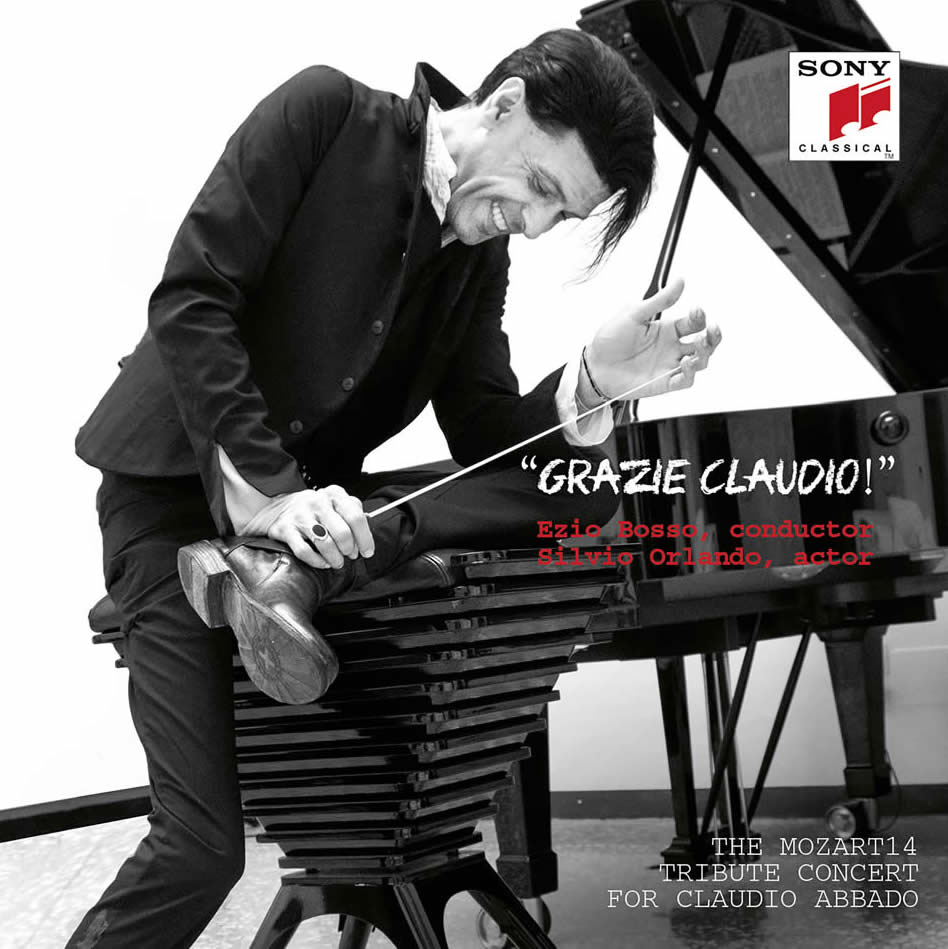
Grazie Claudio!

Grazie Claudio!

Ezio Bosso conducts “Grazie Claudio!” (Thank you Claudio!)
A Mozart14 concert event for the five-year anniversary of the death of Claudio Abbado.

On 20 January 2019, fifty musicians from the best orchestras around the world – comprising important way-markers on Abbado’s professional trajectory – answered the call from Ezio Bosso and Alessandra Abbado’s Mozart14 association to join young talents of the European Union Youth Orchestra and friends of the Europa Philharmonic Orchestra founded by Maestro Bosso, to form a large unnamed orchestra in order to commemorate in music and friendship the five-year anniversary of the death of the great Milanese Maestro, in the Manzoni auditorium in Bologna.

This was a unique event that – in total respect of Abbadian principles – commemorated him with joy and without rhetoric, to convey the pleasure of rediscovering each other after long and often distant careers, and pay tribute to him above all with that absolute quality that he has always asked of his musicians.

Keith Pascoe, Jörg Winkler, Luca Franzetti, Jacques Zoon and Etienne Abelin are just some of the names who participated in the great concert in Bologna, happy to be united under the baton of Ezio Bosso – for many of them former colleague, now conductor after a very long period of formation comprising collaborations with the most important orchestras in the world. nd many of them are today part of the large open community known as the Europa Philharmonic Orchestra, the true embodiment of Bosso’s ethical, cultural and musical principles. This orchestra has recorded two Sony albums, which are in distribution worldwide, and also starred on the highly successful TV programmeme of Bosso’s creation, “Che Storia è la Musica”, as well as performing many concerts as part of the best seasonal programmes.
The concert in Bologna sold out immediately, and, with its repertoire evenly shared among all the musicians, as was Bosso’s want, represents a true choral homage from so many professionals to a musical season that saw Italy at the forefront of the European cultural panorama. A perfect programme to evoke the memory of Abbado, accompanied by an unprecedented and amusing touch of irony in the smiling voice of Silvio Orlando, making his debut in this narrative role.

“The Grazie Claudio!concert was organized by the Mozart14 Social Advancement Association to commemorate Claudio Abbado on the fifth anniversary of his death. The intention was to thank him for having enlightened us on so many aspects of music and its benefits, which he always desired to bring to as broad a public as possible: from those who already enjoy it to those who have not yet had the experience, but above all to those who found themselves in conditions of social hardship and suffering.
Also to thank him for his involvement in initiatives that saw music allowed not only within the walls of a pediatric hospital, as part of the therapeutic process, but also within the semi unreachable surroundings of the prison, where it could become an opportunity for self-discovery and provide a moment of listening and collaboration with others.
Last, but not least, to thank him for showing us the unifying power of music, as a universal language, that knows no bounds or frontiers, whether geographic or cultural, material or formed of prejudice. Music, which is freedom of expression. Listening exercise.
Mozart14’s gratitude joins that of the more than 4000 children who benefited from Tamino’s music therapy while they were being treated in hospital; of the more than 600 inmates who sang in the Papageno Choir in prison; of the young people who composed songs for young offenders during the Leporello song writing sessions; of the many deaf children and adolescents or those with sensory disabilities who discovered their voices by attending Cherubino’s rhythm and vocal workshops

Alessandra Abbado
President of the Mozart14 Social Advancement Association

  • G. Rossini Ouverture, Barbiere di Siviglia;
  • S. Prokofiev, Peter and the Wolf Op. 67, narrator Silvio Orlando;
  • L. van Beethoven, Simphony No.7 in A Major Op.92;
  • Label: Sony Classical
  • Release date: 01/24/2020
  • No. CD: 2

Available from:

Amazon

Feltrinelli

IBS

  • Ascolta su Spotify
  • Ascolta su Youtube
  • Ascolta su Apple Music
The Roots - A tale Sonata

The Roots (A Tale Sonata)

Music by: Bosso, Arvo Pärt, J.S. Bach, Messiaen e Beethoven.
Recorded November 2017, Auditorium Giovanni Arvedi, Cremona.

Sooner or later there is a moment in life when we begin to reflect intensely on our roots. Often it coincides with the loss of a root that is essential for us, for example the death of a parent, as in my case. My father passed away, and missing him made me think about my roots. o I stopped to think: what are our roots? Undoubtedly, they are a wonderful thing. As kids we think they represent an obstacle; growing up, we realise that they are the ones who helped to make us independent. It is as adults that we discover in ourselves the strength to be able to take root wherever we want, for example by creating a family or a network of important relationships, as trees do.

The roots of some trees have the same volume as the trunk and branches, or connect to those of neighbouring trees, perhaps for mutual help. These were the thoughts that prompted me to ask myself what the roots of my music are. I completed it shortly before the recording sessions for this album, after a long gestation period lasting three years, because it was my firm intention to include all my roots in it. I adhered exactly to the sonata style, both in terms of form, in the first movement, and structure, employing an initial adagio that transforms to become a presto in the finale. It begins with a thought, and the first movement is titled “Very slow, like a funeral march”; but that march evolves and over the course of the sonata something happens, indeed a lot happens – because our roots, once discovered, can free us.

Music to discover my musical roots, music to discover those of other music. For example, of minimalism. One, according to many, is Fratres, a 1977 piece by Arvo Pärt, where the composer in turn goes in search of his own roots. He composed it in a monastery using as a guide a sequence of square root numbers that repeats itself over and over. It is the root that comes back.

Then, of course, there is Bach, the root of my Sonata for piano and cello and more: the roots of belief because faith is a form of conquered root. Bach’s faith, which is absolute faith in music and Christianity, is felt quintessentially in his choral pieces, Ich ruf zu dir, Herr Jesu Christ and Wenn wir in höchsten Nöten sein.

Our roots can also be the lifeline we cling to in the worst moments of life. Our roots can also be the lifeline we cling to in the worst moments of life. In the summer of 1940, Olivier Messiaen was a prisoner of war in Germany, and relied on his Christian roots; he composed the Louange à l’Éternité de Jésus which is part of the Quartet for the end of time, one of the most beautiful instrumental works of the 20th century.

Bach, Messiaen and Pärt are all roots that you will hear interwoven in my Sonata for piano and cello, where you can also discover two others. The first consists of a small song of mine entitled Dreaming Tears In A Crystal Cage, dedicated to John Cage and I’m sure you will understand why. It talks about feeling like you are in a cage and about the tears we hold back, the ones that flow within us instead of falling from our eyes. The second is Beethoven.And of course I couldn’t fail to mention that sustained Adagio from the Piano Sonata “In the Moonlight” which led me to become a musician; still a child, I went without my parents’ permission to buy the score.

In England, those who have passed away are often celebrated by the telling of stories about them, and by singing together; one of the many ways to recover one’s roots. They are called “mourning parties”, creating word associations with both morning and the idea of grieving. “Mourning”, to grieve, is just one more “u” than “morning”. One both remembers and celebrates. The second movement of my sonata, the trio, is precisely to do with remembering one’s origins. The third movement, the scherzo, alludes to when you do not accept your roots and try to escape them, but this escape then fails. Until you get to that liberation where everything comes together, the fourth and last movement, the ‘allegro molto’, where you discover the true root: being connected to each other just like the roots of the trees. Happy listening.

Ezio Bosso

CD 1

1. Arvo Pärt, Fratres
2. J.S. Bach, Ich ruf’ zu dir, Herr Jesus Christ , BWV 639
3. J. Cage, Bagatelle No.3: Dreaming Tears in a Crystal Cage
4. O. Messiaen, Quatuor pour la fin su temps: Louange à l’Éternité de Jésus
5. J.S. Bach,Wenn wir in höchsten Nöten sein, BWV 641
6. L. Van Beethoven, Piano Sonata No.14 in C- Sharp Minor, Op.27 No.2 “Moonlight”: Adagio sostenuto
7. J.S. Bach, Sonata for Cello and Piano, BWV 1027: Andante

CD2

1. Ezio Bosso, Adagio molto (Like a Funeral March)
2. Ezio Bosso, Trio, dolcemente (Remembrances, a Mourning Song)
3. Ezio Bosso, Scherzo, presto (A Radication Will)
4. Ezio Bosso, Finale, allegro molto ma giusto, presto con fuoco

Ezio Bosso, piano
Relja Lukic, cello

  • Label: Sony Classical
  • Release date: November 9, 2018
  • No. CD: 2

Available from:

Amazon

IBS

  • Ascolta su Spotify
  • Ascolta su Youtube
  • Ascolta su Apple Music
Amazon Ezio Bosso Stradivarifestival Chamber Orchestra

Ezio Bosso StradivariFestival Chamber Orchestra

One of the things that music has taught me and given me is that you never stop learning and discovering. It creates a chain reaction of learning and transcending. Indeed, it is this curiosity that saves you and changes your life, every time you experience it. It forces you to question yourself and put yourself out there, to be humble in order to remain always at the service of a true mystery; to make you curious about whatever happens, to listen to others and to yourself, to be ready to learn, from everything and everyone.

Music was not born as a language in itself but as a form of transcription. Indeed, music is the only form of transcription of the whole, of the existential universe that goes from science to human and emotional experiences. It is so strong and fundamental that it is the only art form that is even capable of transcribing itself.

Tolstoy said that music is the shorthand of emotion. I will go one further, music transcribes everything: it was born to transcribe the sounds of nature, and over the centuries became a way to translate opinions, including social or religious ones. Music is “transcribed” every time it is performed: for example, when I play a Bach piece on the piano, immediately what I perform becomes a transcription, even though not even a note of the score is changed, and the reason is simple: Bach could not even remotely have imagined the sound of the modern piano. This is why the first CD of this album is dedicated to the very principle of transcription. Transcription is the very nature of music.

The second CD contains Tchaikovsky’s Serenade for Strings in C Major. it is a magnificent composition that is surprisingly little-known. This Serenade is also a form of transcription and you will see why.

Ezio Bosso

CD 1

1. Alessandro Marcello – Johann Sebastian Bach – Ezio Bosso Adagio
2. Pyotr Ilyich Ciaikovsky – Ezio Bosso October,from The Seasons, Op.37a
3. Ezio Bosso In Her Name, The Sea Rain
4. Johann Sebastian Bach Arioso, from Harpsichord concerto in F minor, BWV 1056
5. Ezio BossoSplit, Postcards from Far Away (The Tea Room)
6. Johann Sebastian Bach – Alexander Siloti – Ezio BossoPrelude in B minor BWV 855a n. 18
7. Ezio Bosso Rain, In Your Black Eyes
8. John Cage 4′33″ I
9. John Cage 4′33″ II
10. John Cage 4′33″ III

CD 2

Pyotr Ilyich Tchaikovsky – Serenade for Strings in C major, Op. 48

1. Adagio molto (Like a Funeral March)
2. Trio, dolcemente (Remembrances, a Mourning Song)
3. Scherzo, presto (A Radication Will)
4. Finale, allegro molto ma giusto, presto con fuoco

  • Label: Sony Classical
  • No. CD: 2
  • RecordedFebruary 1-32018, Auditorium Giovanni Arvedi, Cremona

Available from:

Amazon

Feltrinelli

IBS

Mondadori


  • Ascolta su Spotify
  • Ascolta su Apple Music

The Venice Concert

The Venice Concert

This is not (only) a record for me; it represents the very essence of everything that happens when I make music. There is the good fortune of being able to experience music. There is the quintessence of my luck, as if it were enclosed in a precious casket. There is every nuance of the wonder involved in doing what I do. Maybe that’s why I like the English term, album. Because album means so many things. It conjures up that photo album of the past, the one that told the story of an event, or of a family, or of a person. That’s why deep down I understand why records are called albums. Not with regard to their most superficial definition, as mere collections of songs, but because they contain history, deep feelings, time, lost or changed places: and our eyes go on a journey into the snapshots they contain.

Music even enables us to travel in time, to find ourselves hundreds of years away, in places seen through the eyes of a woman or a man of that time who transmits them to another human being today. And somehow it is the records, even more than the concerts, that enable us to participate in the very moment in which that journey takes shape.
Indeed, they really contain it all. Precisely because it’s not (just) a disc: this is a concert, and it somehow replicates going to that concert. It is a place, it is a story made up of many stories. I experience music as a responsibility and for me the choice of a concert programme is part of that responsibility. So how did it start, this experience that you now hold between your hands? With friends of the Fenice Philharmonic Orchestra who about a year before the concert you are about to listen to – or have perhaps already listened to – came to see me saying “We want to work with you and we will everything we can to make it happen.” They succeeded, even though during that first meeting I still didn’t know if I would be able to conduct an entire programmeme. About six months later, we met again in a hotel in Mestre and they told me that they were ready; I replied that I didn’t know if I was, but that I would do it anyway.

Ezio Bosso alla Fenice

As always, I believe it is essential to ask others what it is they want to together. And their request was born from this principle: it had to include the Symphony No. 4 Op. 90 by Mendelssohn, known as the “Italian”, as well as something of my own composition. So I thought about it and proposed Bach, Bosso and Mendelssohn. Strange combination, right? Yet without Mendelssohn, Bach would have been forgotten. After his death, for many reasons, his scores were lost or forgotten. But Felix loved Bach, for him he was a role model and progenitor exactly as Beethoven was: in addition to playing, directing and composing extraordinary music, our Felix was also part of the only choir that in his day still sang Bach. It was this very activity which gave him access to the score of the Passion according to Matthew, which he then reconstructed and which at the first performance was so successful that Bach’s scores returned to circulation. In addition, Mendelssohn is like a brother to Bosso. His use of timbre, indeed his search for new timbres, are an inspiration to me. He is a man who has helped to shape great changes, after all it was he who contributed in a decisive way to the development of romanticism, shaping it from the existing classical rules of musical composition.
From Mendelssohn we thus arrive directly at “Esoconcerto”, the first concerto for violin and orchestra that I ever wrote, based on the three principles of creation and the three principles of the concerto, representing an initiatory path: that of every creator of art.
In “Esoconcerto” there are several hidden elements. I’ll reveal two of them. One is my beloved Bach, and his love for Vivaldi and his violin concertos. The other is that it contains a tribute to a concert that revolutionised the history of violin concerts: the Concerto Op. 64 in E minorby Mendelssohn. So as if by magic, the newcomer acts as a bridge between the other two. And ultimately it is so because we performers are, above all, bridges: bridges connecting yesterday with today and tomorrow.
I mentioned Vivaldi and Bach’s love for his music: and Vivaldi was from Venice. That’s why I chose Bach’s third Brandenburg, which is one of his most Vivaldi-like concerts, and with friends in the orchestra I worked on a sound that would link modern instruments we use today with those of antiquity, respecting the tones and musicality of the times of Bach, but staying faithful to the sense of experimental research that is always present in these concerts. There is also another funny little anecdote, about Bach’s passion for Vivaldi. Bach transcribed so many of the Venetian’s works, including an adagio for the organ – as famous then as it is now – transcribed from the adagio of an oboe concerto, but also that of the “Anonymous Venetian”! Too bad that Bach was confused, and that that concert was not in fact by Vivaldi but by Alessandro Marcello! So I decided to improvise on Bach’s transcription, as a cadenza for the adagio. To honour my host city but also because it made me smile, to think about Bach and how much he wanted to be Venetian.

Ezio BOSSO & Sergej KRYLOV

What a lot of Venice, given that Bosso also studied there too… But of course this brings us to Italy’s extensive influence on masterpieces more generally, not to mention its production of them. The “Italian” symphony encompasses a vision of Italy – its four movements are descriptions of Mendelssohn’s trip to Italy. In 1829, Mendelssohn and his wife set off for what at the time was called the Grand Tour, a fashion exalted by Goethe, the greatest intellectual of the time. One could not call oneself an artist without visiting Italy, in Goethe’s opinion. Venice, Florence, Rome and Naples were the main cities. And it was during this journey that Mendelssohn wrote this symphony, performed in 1833 in London, where Bosso later lived among other things…
These notes represent his final gesture, of the time he is living in, of his traditions; and for us performers they become the first gesture in bringing him closer to those who listen to us. We are a go-between. For this reason, in addition to musical thought, it is necessary to study the era, the composer’s ideas and also his experiences. We must study the instruments as they worked at the time, to bring them into being via those of today. Studying music is an opportunity to study everything,and with this symphony Mendelssohn makes it easy for us. The letters he writes to his sister and his notes show us the path to take through his score. The first movement is defined by the encounter with the light of Italy, its frenzy, joy, and complexity. In the chiaroscuro of the masterpiece of pain and hope that is the Andante con moto, he tells of having attended a funeral in Naples and of how he was so impressed by the blackness that overcame everybody, to then make way for that immense light and hope that he saw all around. While in Venice he tells of a poem about fairies written there by Goethe and from which he takes inspiration for the magical tone of his minuet. Then he goes back to the south, home to the ‘tarantolati’ and the ‘saltarello’… Those notes encapsulate all of this, it forms part of our studies.

But even though it always contains a story within it, music is itself the most beautiful story: “there are more things in heaven and on earth than in all your philosophy”, as Hamlet says to the good Horace. Indeed, in short, this is not (only) a record. But rather a story, a journey, a space to enter – and a concert to participate in.
There is also the idea of sound, that which you will hear here: one philosophy that accompanies every recording I make is that it is not only about listening but also about participation. Recordings are above all an opportunity to continue to make music and grow. You can follow the breath from that past moment to yours today. Because music is a wealth that must be shared.

For all these reasons, this isn’t (just) a record. It contains too many things: the passion of seventy people, a wonderful soloist, and all our stories. It contains the eighteenth century, the nineteenth century, 2004, and 2016. For me every time I play it’s like being reborn, but in this case, it really is a rebirth. That day I made it, thanks to all my companions on the journey. Here is both the music I come from and the one I have created, and there is still so much to discover. But it is no coincidence that all this took place in the Fenice theatre – ‘fenice’ after all means phoenix in Italian making it just the right name for a magical album dedicated to music: music that has the power to revive something, to bring something back into being, every time it is played. Just as every time this album is played it will have the power to recreate that rebirth.
Welcome to the most beautiful theatre in the world, welcome to La Fenice.

Ezio Bosso

JOHANN SEBASTIAN BACH
Brandenburg Concerto No.3 in G major
– (Allegro)
– Adagio
(Improvised cadence at the harpsichord on J.S. Bach’s transcription of the Adagio fromConcerto for Oboe and Strings in D minor by A. Marcello.)
– Allegro

EZIO BOSSO
Concerto No.1 “Esoconcerto” for Violin, String Orchestra and Timpani
– Allegro molto
– Adagio
– Presto con fuoco

Sergej Krylov: Violin

FELIX MENDELSSOHN BARTHOLDY
Symphony No. 4 Op. 90
– Allegro vivace
– Andante con moto
– Con moto moderato
– Saltarello. Presto

Orchestra of La Fenice Opera House

Sergej Krylov: Violin (Tracks / tracce 4-6)
Ezio Bosso, Conductor / conductor and harpsichord (Tracks / tracce 1-3)

Recorded live October17, 2016, Theater La Fenice, Venice

  • Label: Sony Classical
  • Release date: November 18, 2016
  • 2Cd+Dvd

Available from:

Amazon


  • Ascolta su Spotify
  • Ascolta su Apple Music

Available for hire

  • 1 Vln. solo
  • 6 First Violins
  • 6 Second Violins
  • 4 Violas
  • 4 Cellos
  • 3 Double Basses
And The Things That Remain

...And The Things That Remain

from 2004 to the present day

And The Things That Remain is the title of a trio for violin, cello and piano that I wrote a short time ago. It speaks of that thought, that question that we inevitably ask ourselves at a certain stage in our lives: at the very end, what is left of everything, what remains afterwards? What remains of us and what have we got left?
I am still rather reluctant to let people hear this trio, as it was created in the most absolute silence. And, in that silence, as it usually happens, I asked questions to those who were around me and to anyone else I could possibly pose them to. I have also started to collect other people’s business.

I have collected and am still collecting their words and their accounts, absolutely anything – even objects – that could be considered a reply from the people I spoke to: photographs, poems, letters, sounds, paintings. Perhaps the most moving things are the old photos which depict parents and I recall a phrase: “I originate from that smile and that same smile is all that remains of them.

Basically, also this brief anthology represents some of the things that remain and, also in this case, I asked and shared choices with other people. The things that remain, written by myself and chosen by those I love, by those who follow me; I wish to be clear, there’s also something that I chose personally, together with Luciano who has supervised this anthology: I haven’t left everyone else to do all the hard work …

I hope it will be like this: a short trip to Ezio’s era, to that 10-year period packed with life experiences and recordings. In any form: as an orchestra, a quartet, as a conductor-organist and obviously as a pianist.
One of the magical aspects of music is that it allows you to travel in time, to make time stand still, to make it either expand or make it shorter. It’s just like the voyage undertaken by an astronaut inside a black hole. I will be happy if you like these choices; obviously, I would have included more tracks but, Sony Classics, my new recording company, has told me that the ones we have chosen have already filled up two CDs… As this is the first project that we have worked on together, I decided to include some new tracks. One of them is Unconditioned, Following A Bird which I think, by now, has become the most well-known piece that I have ever written, yet this is a version which is both old and new at the same time (always due to that free, magical power): the version written for cello and piano which derived from the one originally written for violin. One day I may also have to record that version, who knows? So you will have the chance to choose which one represents you the most.

The other piece refers to an adverse weather condition that, up until now, I have never had the courage to narrate in detail, perhaps because it the one which frightens us the most: “grandine” in Italian, which in English is hailstones and hailstorm (it’s true, everything sounds cooler in English …). This is the most devastating weather condition that exists and also the most absurd; it is truly the sky which falls onto the earth, as the Celts once told, and no-one likes that phenomenon that comes from the largest, awe-inspiring cumulonimbus clouds that they also called “the King of Clouds.” If you are afraid of hailstones, its violent noise and its majesty are often associated with intense, excruciating pain. I finished composing this piece only a few hours before I started recording. With me, on the cello is my faithful companion, my “brate” as we call each other: Relja Lukic. His sound is truly one of the voices that I am unable to describe, you’ll hear it on this CD. I just couldn’t help inviting him to accompany me on this first adventure, yet another opening of rooms in the new recording company to which I belong.

Where did we record it? Obviously in my beloved Teatro Sociale belonging to my beloved Gualtieri and this time, we decided to go over the top by shooting a video of the recording sessions, so you could actually visit it and be there with us too! Do you think we overdid it? Of course we didn’t, after all it is great to prepare an abundance of food for those you love, and in any case, that is how it works for me, I try to do everything right up until my last breath, to dare, to try to do better and to be better.

By sheer coincidence, I discovered that this phrase is consonant with some of the poems written by our Emily (Dickinson).
Here is one of them:

Some things that fly there be–
Birds, Hours the Bumblebee–
Of these no Elegy.

Some things that stay there be–
Grief– hills–eternity–
Nor this behooveth me.

There are, that resting, rise.
Can I expound the skies?
How still the Riddle lies!

While I am writing, I continue to think, over and over again, about the things that remain and I realise that the recordings, the CDs are actually one of those things that remain.
It is often what remains of the sound, the idea, the touch and above all, of a precise moment in a musician’s life.
Just like those photographs…

Ezio Bosso

CD 1

  1. J.S.Bach / A.Siloti – Prelude BWV 855a
  2. Smiles For Y
  3. C.Debussy – La fille aux cheveux de lin
  4. Before 6
  5. Sixth Breath, the Last Breath
  6. Rain, In Your Black Eyes
  7. Speed Limit, a Night Ride
  8. Diversion, Street Kisses
  9. Clouds, the Mind on the (Re)Wind
  10. Pines and Flowers

CD 2

  1. Unconditioned (Following, a Bird)
  2. Mechanical Dolls
  3. The Nights
  4. Tree’s Sacrifice
  5. Emily Dickinson, Who Cares About the Bluebird Sing?
  6. F.Chopin – Prelude Op.28 No.4
  7. Symphony No.1 – Finale: Landfall, We Unfold
  8. Grains (An Hailstorm)
  • Label: Sony Classical
  • Data prima uscita:18 novembre 2016
  • 2Cd+Dvd


Available from:

Amazon

  • Ascolta su Spotify
  • Ascolta su Youtube
  • Ascolta su Apple Music

eziobosso-piano-solo-collection


The Piano Solo Collection
from “The 12th Room” for Solo Piano (2015)

  • Following a Bird (Unconditioned)
  • J.S.Bach / A.Siloti,Prelude BWV 855a
  • F.Chopin, Preludio Op. 28 No. 4
  • Smiles for Y…
  • Before Six

MORE

The 12th Room

The 12th Room

Piano solo.
CD1 Music by Bach, Bosso, Cage, Chopin, Gluck-Sgambati.
CD2 Bosso – Sonata No. 1 in G Minor for Solo Piano (The 12th Room)

There is an ancient theory which says that life consists of twelve rooms. In each of these 12 we will leave something of ourselves, which other will remember us by. Twelve are the rooms that we will remember when we pass through the last one. Nobody can remember the first room because when we are born we cannot see, but it would seem that by the time we reach the last room, we can remember it all. And that’s when you can go back to the first. And start over.

Disco 1

  1. Bosso: Unconditioned, Following a Bird (Out of the Room)
  2. Chopin: Prelude Op. 28 No. 20 (The Burned Room)
  3. Bach-Bosso-Siloti: Room BWV855a from cantata in G minor (The God’s Room)
  4. Chopin: Prelude No. 8 Op. 28 (The Dark Room)
  5. Bach- Bosso: Room No.2 (The Breakfast Room)
  6. Chopin: Prelude No. 6 Op. 28 (The Painroom)
  7. Bach: PreludeNo. 1from The Well-Tempered Clavier BWV846 (The Building Room)
  8. Bosso: Split, Postcards from Far Away (The Tea Room)
  9. Gluck-Sgambati: A melody from Orfeo e Euridice (The Therapy Room)
  10. John Cage: In a Landscape (The Smallest Room)
  11. Bosso: Missing a Part (The Waiting room G)
  12. Bosso: Emily’s Room (Sweet and Bitter)

Disco 2

  1. Bosso: Sonata No. 1 in G Minor for Solo Piano (The 12th Room)
    • Adagio doloroso, Verso il brio, Con furore, Al tempo primo. (Entering the Rooms)
    • Trio: Sospeso, Dolcemente, Con moto, Agitato. (Dressing the Rooms, Imaginary Room Mates)
    • Finale: Allegro molto, Calmo, Presto, Danza. (The 12th Room)
  • Label: Sony Classical
  • Release date: November 18,2016
  • 2Cd+Dvd

Available from:

Amazon

  • Ascolta su Spotify
  • Ascolta su Apple Music

eziobosso-sonata-g-minor

Sonata No. 1 in G minor
from “The 12th Room” for Solo Piano (2015)

MORE

eziobosso-piano-solo-collection

The Piano Solo Collection
from “The 12th Room” for Solo Piano (2015)

MORE

Music for weather element

Music for weather elements

Composed by Ezio Bosso

Giacomo Agazzini, Violin
Relja Lukic, Cello
Ezio Bosso, Piano

Sunrise On A Clear Day 9:43
Clouds, The Mind On The (Re)Wind 7:07
Snow, A Nocturne For Piano 4:25
Rain, In Your Black Eyes 11:03
Thunders And Lightnings 6:04
Air, On The First Star Of The Night 12:32

Label: Sony Classical
Release date: 2017

  • Ascolta su Spotify
  • Ascolta su Youtube
  • Ascolta su Apple Music
Symphony No. 2 "Under the Trees Voices

Symphony No. 2 - Under The Trees Voices

Live at Suoni delle Dolomiti

Orchestra Filarmonica ‘900 del Teatro Regio di Torino
Ezio Bosso, Conductor

Soloists
Giacomo Agazzini
Cecilia Bacci
Gustavo Fioravanti
Relja Lukic
Davide Botto

Executive Production
Trentino Marketing s.p.a.

Recorded live by Marco Oliviotto for LoL Productions snc at Val di Fiemme – Loc. Carigole, Parco di Paneveggio – Pale di San Martino 15-07-2010

Sound Engineer
Andrea Bergesio

Mix & Mastering
Marco Oliviotto for LoL Productions s.n.c.


    I. Adagio, Under the Tree’s Voices 9:57  
    II. Allegro, Growing as a tree 14:32  
  :III. Scherzo, Pines and Flowers 5:31  
   IV. Trio, Tree’s Sacrifice 7:20  
  V. Finale, presto, Between men and trees) 9:23  

Label: Sony Classical
Release date: 2017

  • Ascolta su Spotify
  • Ascolta su Apple Music

Available for Hire

  • 8 First Violins
  • 8 Second Violins
  • 6 Violas
  • 6 Cellos
  • 4 Double Basses
Six Breaths

Six Breaths

The London Cellos

Ezio Bosso, Piano and Conductor

    Before One 1:53  
  I Breath, Draw Breath 5:47  
  Before Two 1:43  
  II Breath, Out of Breath 3:31  
  Before Three 2:19  
  III Breath, Crying Breath 5:31  
  Before Four 1:10  
  IV Breath, In the same Breath 3:08  
  Before Five 2:14  
  V Breath, Under one’s Breath [Explicit] 3:46  
   Before Six 2:52  
   VI Breath, The Last Breath 5:41

Label: Sony Classical
Release date: 2017

  • Ascolta su Spotify
  • Ascolta su Youtube
  • Ascolta su Apple Music
Road Sign Variations

Road Sign Variations

Ezio Bosso & The Buxusconsort

Ezio Bosso, Piano and Conductor

The Buxusconsort
Giacomo Agazzini
Orpheus Papaphilpou
Roberto Tarenzi
Claudia Ravetto
Michael Duncan
Earl Smith
Michale Smith
Pietro Ballestrero

1
Road Signs Variations: Entrance 5:08  
2
Road Signs Variations: Help, The cathedral in the desert 3:59  
3
Road Signs Variations: One Way 5:09  
4
Road Signs Variations: Diversion, Street Kisses 6:00  
5
Road Signs Variations: Speed Limit 4:32  
6
Road Signs Variations: All Directions 3:55  
7
Road Signs Variations: Merge, One Harm hugs 4:48  
8
Road Signs Variations: Split, Postcards from Far Away 8:53  
9
Road Signs Variations: Cross, An Hallelujah 6:05  
10
Road Signs Variations: Stop, You Can’t Stop the resitance 5:36  
11
Road Signs Variations: Round About, Trees of life 9:26  
12
Road Signs Variations: Exit Run 44 3:46  

Label: Sony Classical
Release date: 2017

  • Ascolta su Spotify
  • Ascolta su Youtube
  • Ascolta su Apple Music

YouTube Music

Tidal

Deezer

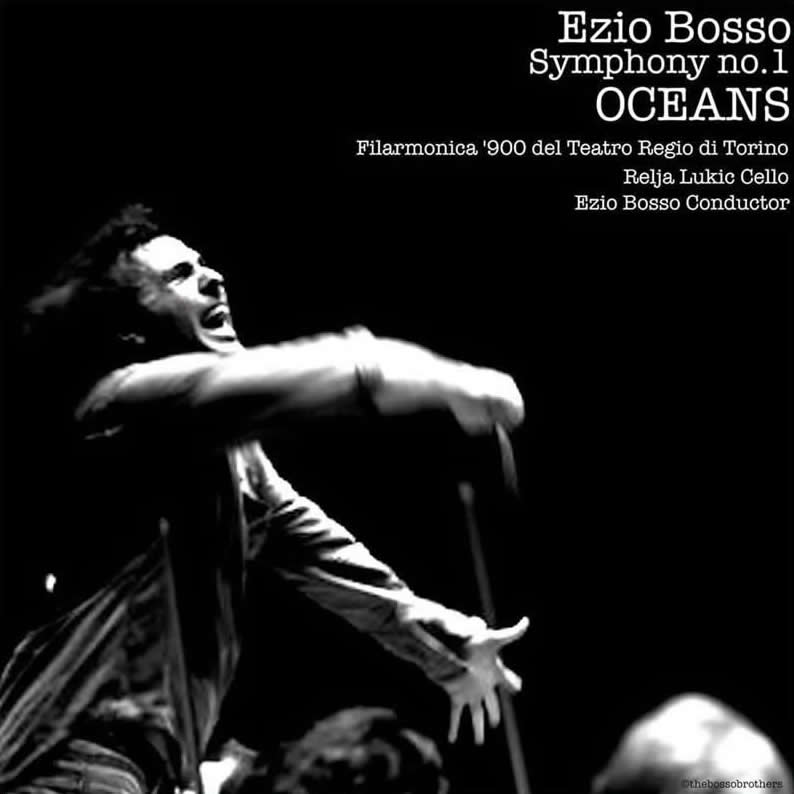
Symphony no. 1 Oceans

Symphony no. 1 Oceans

Filarmonica ‘900 del Teatro Regio di Torino
Relja Lukic, Cello
Ezio Bosso, Conductor

   I. Allegro Giusto “To Plough the Waves” (Atlantic) 15:38  
   II. Trio “Nostalgija, an Immigrant Song” (Arctic) 11:18  
  III. Scherzo “Oceania” (Pacific) 7:22  
  IV. Adagio “White Ocean” (Antarctic) 10:36  
  V. Cadenza 7:51  
  VI. Finale “Landfall, We Unfold” (Indian) 12:48  
  • Label: Sony Classical
  • 2017
  • Ascolta su Spotify
  • Ascolta su Youtube
  • Ascolta su Apple Music

Available for hire

  • 1 cello solo
  • 14 First Vln.
  • 12 Second Vln.
  • 10 Viola
  • 8 Cellos
  • 4 Double Basses
  • 4 Horn in F
  • 3 Trumpet Bb
  • 3 Trombone
  • 2 Flute
  • 2 Oboe
  • 2 Clarinet in Bb
  • 2 Bassoon
  • 1 Contrabasoon
  • 1 Tuba
  • 1 Celesta
  • Timpani/Gong/Tamburino/Grancassa
seasong

Seasong 1 To 4 and Other Little Stories

Giacomo Agazzini, Violin
Claudia Ravetto, Cello
The Buxusconsort Strings
Ezio Bosso, Piano and Conductor

  Before the Sea 5:14  
  The Sea- Prayer 9:13  
  Waves and Hope 8:35  
  Anamì, The sea Goddess 9:51  
  Bitter and Sweet 4:55  
  Smiles For Y… 4:20  
  Who cares about the Bluebird sing 3:53  
  • Ascolta su Spotify
  • Ascolta su Youtube
  • Ascolta su Apple Music
Music for the Lodger

String Quartet N. 5 - Music for The Lodger

Ezio Bosso, Composer

Quartetto d’Archi di Torino
Giacomo Agazzini, violin
Umberto Fantini, violin
Andrea Repetto, viola
Manuel Zigante, cello

  Introduction 6:55  
   Adagio, The Arrival 7:54  
  Andante, Connections 7:07  
   Presto, Danger in The House 2:06  
  Intermezzo 1, Mechanical Dolls 1:23  
  Intermezzo 2, The Hunting 1:44  
   Moderato, The Seduction 5:22  
  Adagio, Sickness 2:49  
  Allegretto, Discover you 4:33  
  Lento, An Impossible love 3:38  
  Presto, You Are Mine! 9:15  
  Grave, Alone Before the End 1:58  
  Finale, Allegro con fuoco, The Lynch
  • Label: Sony Classical
  • 2017
  • Ascolta su Spotify
  • Ascolta su Youtube
  • Ascolta su Apple Music
Esoconcerto

Violin Concerto No. 1 - The EsoConcerto

The Buxusconsort Strings

Ezio Bosso, Conductor
Giacomo Agazzini, Violin
The Buxusconsort Strings

    I. Allegro Molto 7:29  
  II. Adagio 11:35  
  III. Presto con Fuoco 7:24
  • Label: Sony Classical
  • 2017
  • Ascolta su Spotify
  • Ascolta su Youtube
  • Ascolta su Apple Music

Available for hire

  • 1 Vln. solo
  • 6 First Violins
  • 6 Second Violins
  • 4 Violas
  • 4 Cellos
  • 3 Double Basses
The Nights

The Nights - The Way of 1000 and One Comet

“The Nights”, String Quartet No.2
“The Way of 1000 and one Comet”, String Quartet No.3

Ezio Bosso, Composer, Double Bass

Quartetto D’Archi di Torino
Giacomo Agazzini, violin
Umberto Fantini, violin
Andrea Repetto, viola
Manuel Zigante, cello

1
String Quintet N. 2 “The Nights”: The Nights (African Night) 4:41  
2
String Quintet N. 2 “The Nights”: I’m Born Child (African Skies) 4:34  
3
Quartet No.3 The Way of 1000 and One Comet: Adagio, The Last Black 5:05  
4
Quartet No.3 The Way of 1000 and One Comet: Allegro Gibigianna 6:49  
5
Quartet No.3 The Way of 1000 and One Comet: Moderato, Gagarin 10:39  
6
Quartet No.3 The Way of 1000 and One Comet: Presto, The Way of 1000 and One Comet 5:40  
7
Quartet No.3 The Way of 1000 and One Comet: Allegretto, The Sky Seen from the Moon 9:55
  • Label: Sony Classical
  • 2017
  • Ascolta su Spotify
  • Ascolta su Youtube
  • Ascolta su Apple Music

Double bass performances

Sentido unico/Sens Unique

Sentido Unico/Sens Unique

Music by Astor Piazzolla

Gustavo Beytelmann, piano
Ezio Bosso, double bass
Luis Agudo, drums and percussions

1. Lo que vendrà (8:28)
2. Rio Sena (5:46)
3. Contrastes (5:34)
4. Imperial (6:15)
5. Maron y azul (7:02)
6. S.V.P. s’il vous plait (6:42)
7. Oblivion (5:14)
8. Sentido Unico (8:44)
9. Chau Paris! (6:02)

live recorded in Italy, december 2001

NBB Records

  • Ascolta su Spotify
  • Ascolta su Youtube
  • Ascolta su Apple Music
Giovanni Bottesini: Musica Con Contrabbassso Product Image Giovanni Bottesini: Musica Con Contrabbasso

Giovanni Bottesini: Music with double bass

Tindaro Capuano, clarinet
Ezio Bosso, double bass
Leonardo Colonna, double bass
Luca Brancaleon, piano
Massimo Polidori, cello
Silvio Bresso, violin

  • Bottesini: Allegro di Concerto alla Mendelssohn
  • Bottesini: Duetto For Clarinet, Double Bass & Orchestra
  • Bottesini: Duo Concertante on Themes from Bellini’s I Puritani for cello, double bass and orchestra
  • Bottesini: Gran Duo Concertante for violin, double-bass & strings
  • Bottesini: Grande Allegro di Concerto
  • Bottesini: Passioni amorose for two double basses and piano/orchestra
  • Bottesini: Reverie
  • Bottesini: Romanza Patetica
  • Label: Stradivarius
  • Release date: 1995
  • Ascolta su Spotify
  • Ascolta su Youtube
  • Ascolta su Apple Music

Original Sound Track

Il ragazzo invisibile

Director: Gabriele Salvatores
Year: 2014

Fantasia for Violin and Orchestra
London Symphony Orchestra
Ezio Bosso, Composer and Conductor

  • Ascolta su Spotify
Rosso come il cielo

Rosso come il cielo

Director: Cristiano Bortone
Year: 2007

Amazon

  • Ascolta su Spotify
  • Ascolta su Youtube
  • Ascolta su Apple Music
Quo vadis, Baby?

Quo vadis, Baby?

Director: Gabriele Salvatores
Year: 2005

  • Ascolta su Spotify
  • Ascolta su Youtube
  • Ascolta su Apple Music
Io non ho paura

Io non ho paura

Director: Gabriele Salvatores
Year: 2003

Fuori catalogo

Un Amore

Un Amore

Director: Gianluca Tavarellli
Year: 1999

  • Ascolta su Spotify
  • Ascolta su Youtube
  • Ascolta su Apple Music